Natural Supplements and HPV: What Research Shows About Viral Clearance

While the majority of HPV infections are transient and naturally cleared by a healthy immune system, persistent high-risk HPV infections can lead to serious health complications, including cervical dysplasia and various forms of cancer. Currently, the cornerstone of HPV management revolves around preventative vaccination, regular screening (such as Pap smears and HPV DNA testing), and clinician-directed treatments for resulting lesions.
A frequently asked question in clinical settings is whether natural supplements can "cure" HPV. The straightforward scientific answer is that there is no supplement that cures HPV. However, an emerging body of scientific research indicates that several natural compounds and micronutrients show significant potential to improve viral clearance and reduce lesion progression. These natural interventions are usually considered as valuable add-ons—or adjuncts—to standard medical care and vaccination protocols.
In this comprehensive guide, we will explore the best-studied HPV-specific supplements, the role of micronutrients and diet, and the potential of herbal and intravaginal products, strictly based on current scientific evidence.

Best-Studied HPV-Specific Supplements
Over the years, researchers have investigated various specific supplements and combinations to determine their efficacy in accelerating the clearance of HPV and promoting the regression of associated lesions. The table below summarizes the main findings of the most well-documented supplements.
Understanding the Key Supplements
EGCG, Folate, B12, and Hyaluronic Acid:
Epigallocatechin gallate (EGCG) is a powerful antioxidant found abundantly in green tea. When combined with essential B vitamins (Folate and B12) and Hyaluronic Acid, this specific formulation has shown remarkable promise. Observational studies, particularly those conducted in Italy, have reported clearance rates between 70% and 86% following 3 to 6 months of treatment. While these results are highly encouraging for both cervical and anal lesions, researchers emphasize the need for large-scale Randomized Controlled Trials (RCTs) to confirm these findings .
Zinc Sulfate:
Zinc is a crucial mineral known for its vital role in immune function. A randomized controlled trial demonstrated that taking oral zinc sulfate for 3 months effectively increased HPV clearance and promoted the regression of lesions compared to a control group. Interestingly, this benefit was observed even in women who were already considered zinc-sufficient, highlighting the specific therapeutic potential of targeted zinc supplementation in gynecological HPV cases .
AHCC (Active Hexose Correlated Compound):
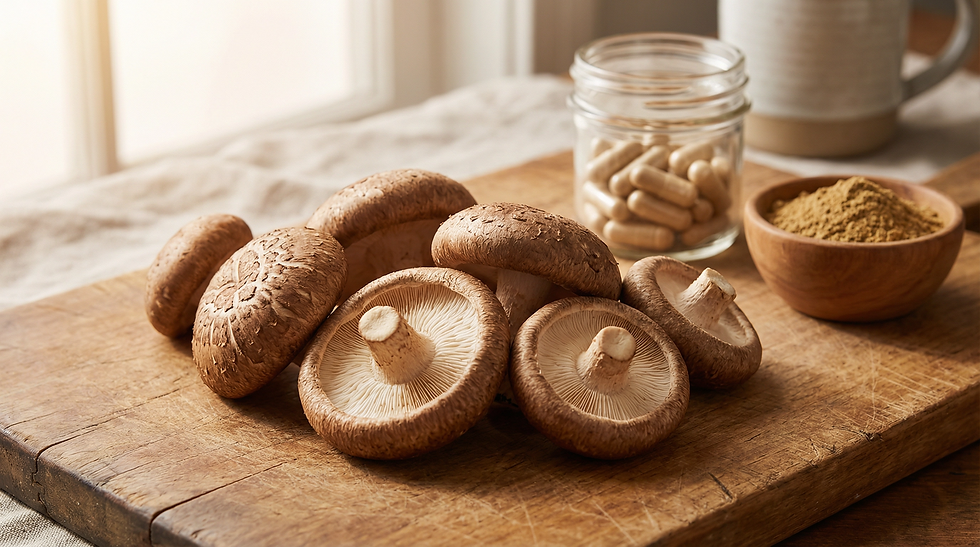
Derived from the mycelia of shiitake mushrooms, AHCC is an immune-modulating extract. Pilot trials have shown that daily supplementation for 3 to 7 months resulted in the clearance of persistent, high-risk HPV in approximately 44% to 67% of participants. Although these initial studies were small and uncontrolled, the medical community is eagerly awaiting the results of an ongoing phase II RCT to better understand AHCC's definitive clinical value .
The Crucial Role of Micronutrients and Diet
Beyond specific supplement formulations, a patient's overall nutritional status plays a fundamental role in how the immune system responds to an HPV infection. A nutrient-dense diet is highly correlated with better clinical outcomes.
Vitamins and Antioxidants
Extensive observational and interventional studies have consistently linked higher intake and optimal bodily status of various micronutrients to less HPV persistence and a lower risk of developing Cervical Intraepithelial Neoplasia (CIN) or cervical cancer. These beneficial micronutrients include:
Vitamins: A, C, D, E, B12, and Folate.
Antioxidants and Minerals: Carotenoids, selenium, and zinc .
Vitamin D, Folate, and Selenium
A comprehensive meta-analysis evaluating the effects of oral and vaginal administration of Vitamin D, Folate/B12, and Selenium revealed significant beneficial effects. These specific micronutrients were shown to support the regression of CIN and substantially reduce localized inflammation in HPV-positive women . Furthermore, higher serum levels of Vitamin D have been strongly associated with a lower prevalence of cervicovaginal HPV in women. However, it is worth noting that the site-specific and sex-specific effects of Vitamin D at oral or anal infection sites remain less clear and require further investigation .
The Impact of Vitamin C
Recent cross-sectional data from the United States provided intriguing insights into Vitamin C. The study found that the use of Vitamin C supplements—but notably not dietary Vitamin C obtained strictly through food—was associated with a lower prevalence of overall HPV and high-risk HPV strains. This suggests that the higher, concentrated doses provided by supplements might offer a distinct immunological advantage in clearing the virus .
Herbal and Intravaginal Products
In addition to oral supplements, localized treatments using natural compounds are also an active area of research.
A recent meta-analysis evaluating various herbal medicines, which included diverse plant extracts, found that these treatments improved HPV clearance and supported CIN regression. Importantly, these herbal interventions demonstrated a good safety profile. However, the researchers noted a high degree of heterogeneity and variable formulations across the studies, meaning that standardization of these treatments is still a major challenge . Furthermore, scientific reviews have highlighted multiple topical natural and synthetic intravaginal agents currently under study. While some of these show promise in localized viral clearance, the majority of these treatments are still in early-stage research. Therefore, they are not yet considered the standard of care in mainstream clinical practice .
Summary and Clinical Takeaways
The current body of scientific evidence suggests that certain targeted supplements—specifically the EGCG+folate+B12+HA combination, zinc sulfate, AHCC, and a robust intake of Vitamin D, Folate, B12, and antioxidant support—may actively increase HPV clearance or support the regression of precancerous lesions. However, it is vital to approach these findings with scientific rigor. Many of the studies conducted thus far are relatively small, non-randomized, or highly heterogeneous in their methodologies. Therefore, natural supplements should never be viewed as stand-alone cures. The pillars of HPV management remain unchanged: preventative vaccination, regular medical screening, and clinician-directed treatment. Supplements should be strictly considered as adjuncts—supportive therapies that work alongside standard care. Anyone considering adding these supplements to their regimen should first have a detailed discussion with a qualified healthcare professional to ensure safety and appropriateness for their specific medical profile.